
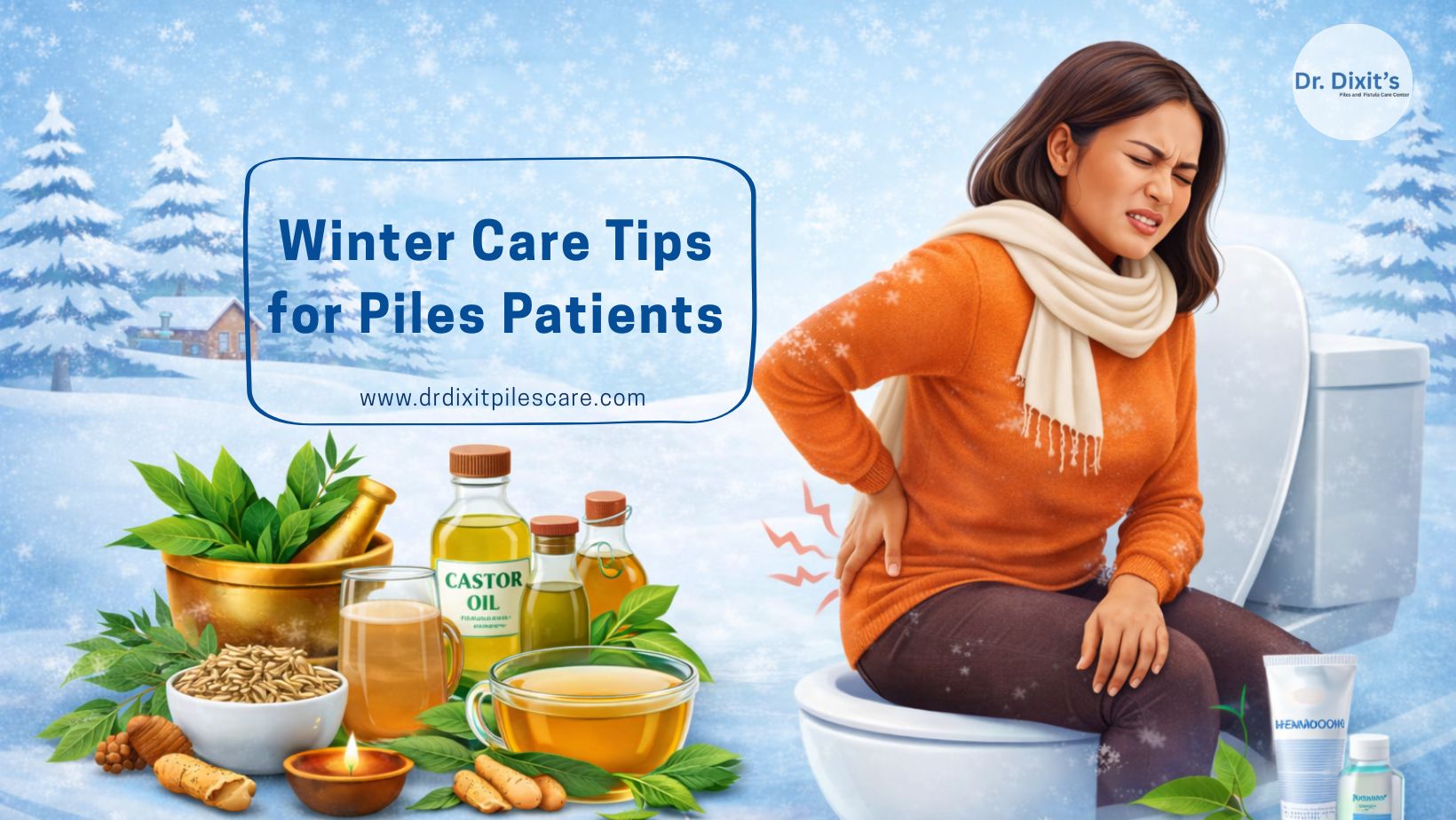
The winter season can be particularly challenging for individuals suffering from piles (hemorrhoids), especially women. Cold weather and lifestyle changes can often exacerbate symptoms, and you may feel more pain at this time. But must know that treating it during this season can be easy as well. If you are a piles patient, you need to change your food habits, how you live, and how you take care of yourself to feel better during the winter season. This blog offers winter care tips for piles patients. It will cover food, lifestyle changes, and some Ayurvedic practices to help women feel better and manage their condition.
Why Winter Is the Best Time to Treat Piles
While piles can be bothersome year-round, winter can help ease them. The cold air can make it easier to deal with piles. There is less risk of flare-ups or infections, which often occur when it is hot. Also, people usually get more rest in winter. This extra rest can help treat piles.
In winter, these things can help you:
- Less sweating and friction: Cooler weather reduces both. There is less skin-to-skin rubbing, too. This helps keep away the pain or itching that comes with piles and does not make symptoms worse.
- Less pressure on the body: In colder months, most people want to stay indoors. They usually rest more and avoid excessive physical activity. This means there is strain on the veins in the rectal area.
- Time for treatment: With fewer outdoor activities, you have more opportunities to follow a treatment routine. You can fit in Ayurvedic therapies without getting distracted. This helps you stay on your treatment plan.
By taking the proper steps to care for piles, people can feel better for a long time. This also helps them stay healthy during the winter.
Dietary Adjustments for Piles Patients During Winter
It’s essential to follow a diet that supports digestion and helps prevent constipation. This can help prevent flare-ups, since constipation is one of the main reasons they occur.
5 Foods to Avoid with Hemorrhoids:
- Spicy foods: Hot spices can irritate the digestive system and exacerbate symptoms of piles.
- Red meat: Heavy red meat is hard to digest. This can lead to constipation and strain during bowel movements.
- Dairy products: Sometimes dairy can make you feel bloated, which can aggravate piles.
- Refined sugar and processed foods: These foods can make you feel blocked up and are not suitable for the stomach.
- Alcohol: Alcohol can dehydrate the body, leading to constipation, which is not ideal for patients with piles.
Seasonal Diet Changes for Piles Patients:
During winter, you need to eat foods that help your stomach work well and stop constipation. Here are some things you should put in your diet:
- High-fiber foods: You can eat whole grains, fruits, and vegetables. They help your body to have regular bowel movements.
- Warm broths and soups: These are easy for the body to take in. They help you feel warm and stay hydrated, especially when the weather is cold.
- Hydration: Make sure to drink lots of warm water, herbal teas, and natural fruit juices. This will help you stay hydrated and prevent constipation.
Tips for Piles Care at Home
You can manage piles at home with some simple changes to your daily routine. Here are some winter care tips for piles patients that can help ease symptoms:
- Warm Sitz Baths: A warm sitz bath can help calm sore skin and make you feel better. Use warm (not hot) water for about 10-15 minutes to ease swelling and itching.
- Topical Treatments: You can apply aloe vera gel or store-bought hydrocortisone cream to the area to help reduce swelling and feel better.
- Regular Exercise: It is necessary to stay active even when the weather is cold. A little exercise, like walking or stretching, can help blood circulate and take pressure off your bottom.
- Avoid Prolonged Sitting: Prolonged sitting is not ideal for people with piles. Try to get up and walk around often to reduce the pressure on your bottom.
Best Ayurvedic Remedies for Piles in Winter
Ayurvedic care offers a natural, holistic way to treat piles, especially in winter. At Dr. Dixit’s Piles and Fistula Care Center, we specialise in Ayurvedic treatments. These treatments help heal and reduce the symptoms of piles.
Some of the best Ayurvedic remedies for piles are these:
- Ksharsutra Therapy: This is a minimally invasive treatment. A medicated thread is placed around the piles. This helps shrink their size and promote tissue healing.
- Kshar Karma Therapy: A healing method where alkaline-based substances are used to treat the area. This helps make the piles smaller and eases pain.
- Ayurvedic Medicines: Herbal blends such as Triphala, Haritaki, and Castor Oil. People use these to help digestion, lower swelling, and prevent constipation.
These Ayurvedic remedies can help relieve piles. They also help you get better in the long run.
Lifestyle Adjustments for Piles Relief in Winter
Winter can change your daily habits. Making small changes can help manage piles better. These changes are essential for people with piles:
- Dress warmly: Cold weather can cause blood vessels to constrict, leading to increased pain for patients. Wearing warm clothes and sitting on soft surfaces can help with this.
- Keep a healthy weight: Excess weight can put more pressure on the veins in the lower body, worsening piles. It is good to eat a balanced diet and be active regularly to maintain a healthy weight.
- Avoid tight clothing: It can reduce blood flow. Pick loose clothing, mainly around the waist.
Conclusion: Take Charge of Your Piles Care This Winter
Winter does not have to be a season when people feel embarrassed and concerned about piles. You can feel better in winter by making dietary changes, following simple winter care tips, and using Ayurvedic remedies. This way, you can have a much better and healthier season. As one of the best piles treatment clinics in Delhi, Dr. Dixit’s Piles and Fistula Care Center aims to provide you with safe and comprehensive Ayurvedic treatments. These can help you feel better for a long time. You can book a meeting with us now to start treating your piles effectively.
FAQs
How can I prevent piles during winter?
Drink enough water, eat plenty of fiber-rich foods, and try not to sit for long periods. These steps can lower your chance of getting piles problems.
What are the best foods to eat for piles relief?
Foods that help here include plenty of fiber, like whole grains, fruits, and veggies. These foods help keep you regular and prevent constipation.
Can Ayurvedic remedies cure piles permanently?
Ayurvedic treatments, such as Ksharsutra and Kshar Karma, can help keep piles under control. These may help ease your symptoms.
Is it safe to use herbal remedies for piles during winter?
Yes, it is safe. Herbs like Triphala and Castor Oil can improve digestion and may help reduce symptoms of piles.
How can I relieve pain from piles during winter?
Warm sitz baths, creams for piles, and Ayurvedic treatments can provide significant relief for pain and swelling.